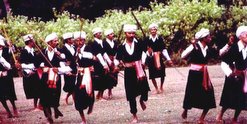
Kaveri Shankaramana :
This festival normally takes place in mid October. It is associated with the river Kaveri, which flows through the district, from its source at Talakaveri. At a pre-determined time, a fountain from a small tank and fills the bigger holy tank at Talakaveri. People throng in thousands, and take a holy dip in this water. This water is filled in bottles and reaches every house in Kodagu and this is treated as Theertha - meaning holy water. This water is preserved in all Kodava houses, and a spoonful of this water is fed to the dying, in the belief that they will attain moksha (emancipation) and gain entry to heaven. - On the day, married women wearing new silk saris, perform puja to a vegetable cut in the form of the goddess Kaveri. This is decorated with flowers and gold ornaments. This is called the Kani Puje. Three sets of betel leaves and areca nut is kept in front of the goddess, with bunches of glass bangles. All the members of the family pray to the goddess by throwing rice and prostrating before the image. The elder members of the family ceremonially bless the younger. Then an older married woman draws water from the well and starts cooking. The menu of the day is dosa and vegetable curry ( usually pumpkin curry (kumbala kari) ) and payasa. Non-vegetarian food is not cooked on that day. This is the only festival wherein non veg is not prepared.
Kailpoldu : is celebrated in the first week of September.. The priests in consultation with their temple documents determine the exact date of celebration, which falls between the 2nd and 4th of September. Kail means weapon or armory and Pold means worship. The day signifies the completion of "nati"- meaning the transplantation of the paddy crop,
Normally, during the months in which the family is engaged in the fields, all weapons are deposited in the "Kanni Kombre" or the prayer room. The festival also signifies the day that men should prepare to guard their crop from wild boars and other animals. Hence, on the Kailpoldu day, the weapons are taken out of the Pooja room, cleaned and decorated with flowers. They are then kept in the "Nellakki Nadubade" - the place of community worship.
All the members of the family have a bath and worship the weapons. Feasting and drinking follow. The eldest member of the family will hand over a gun to the senior member of the family, signifying the commencement of the festivities. The whole family assembles in the " Mand " (a open ground), where physical contests and sports including shooting are conducted. In the earlier days hunting and cooking of the wild animals was part of the celebration, but, these days the shooting skills are tested by firing at a coconut target in a tree.
Puttari : means new rice, and is the rice harvest festival (also called huttari in adjacent Kannada speaking country). This takes place in late November or early December. Celebrations and preparations for this festival, starts a week in advance. On the Puttari day, the whole family assemble in their ain mane ( the common family house ) which is decorated with flowers and green mango and banana leaves. Specific foods are prepared("thambuttu puttari mean kari(fish kari)poli poli(chant)")thambuttu is a dish prepared with rice floor and bananas. Then the eldest member of the family hands a sickle to the head of the family, and one of the women leads a procession to the paddy fields, with a lit lamp in her hands. The path leading to the field is decorated. A gunshot is fired to mark the beginning of the harvest, with chanting of "Poli Poli Deva" (prosperity) by all the people present there. Then the symbolic harvesting of the crop starts. The paddy is cut and stacked and tied in odd numbers, and is then carried home, to be offered to the gods there. The younger people then burst crackers and revel, symbolising prosperity. Group of youngsters then visit the adjoining houses and show their dancing skills, and earn monetary gifts. A week later, these monetary gifts are all pooled and a community dinner of the entire village) is celebrated. All the family members would gather for the dinner. Dinner would normally consist of meat dishes such as pork and fish curry. Alcoholic drinks are also served at such feasts.

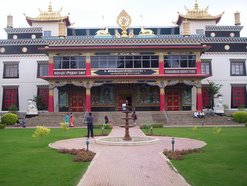
 Kushalnagar in Coorg is the second largest Tibetan settlement outside Tibet, complete with a Tibetan monastery with 7,000 monks, a Tibetan village. After the Chinese took over Tibet, the refugees were settled at Bylakuppe Near Kushalnagar and the Buddhist Monastery was re-established here in 1972.The monastery not only attracts large number of young Tibetans seeking enlightenment and education, but also draws huge tourists from all over India and abroad. The Golden Temple is extremely beautiful and extremely well maintained, it's an eye catching architure.The people are very religious and are very soft spoken too, the Entire city is full of Tibet Culture and people from across the work come here to be a desciple.The Place is completely Full of greenery and if Lucky you may get to see some wild animals.